


An anterior cruciate ligament (ACL) tear doesn’t always require surgery. The decision depends on how stable your knee feels, the injury’s severity, and the activities you want to return to. Some people regain function with rehabilitation, while others benefit from knee surgery, particularly when the knee repeatedly gives way.
Across Wichita, Wellington, and Winfield, KS, Advanced Orthopaedic Associates treats knee injuries with surgical and nonsurgical care. The team includes Phillip F. Hagan, MD, a board-certified orthopaedic surgeon with sports medicine fellowship training and experience in ACL reconstruction.
Signs an ACL Tear May Need Surgery
Your anterior cruciate ligament helps keep the knee stable during movement. When it’s torn, your symptoms and how much you use your knee can guide treatment. Surgery becomes more likely when:
- Your knee feels unstable. Buckling during walking, turning, or changing directions can signal that the injured ligament isn’t supporting the joint well enough.
- You play pivoting sports or do demanding physical work. Basketball, soccer, skiing, and jobs involving sudden turns may be difficult with an unstable knee.
- You have other knee injuries. A torn meniscus, another ligament injury, or a cartilage injury can affect the decision.
- The ACL is completely torn. Complete tears are more likely to cause lasting instability, though not everyone with a full tear needs an operation.
Pain and swelling alone don’t determine whether you need surgery. You might even be able to walk after an ACL tear, so the way your knee feels in the first few days doesn’t tell the whole story.
Can You Recover Without ACL Surgery?
Sometimes. A partial tear with little or no instability may respond to physical therapy. Even a complete tear can sometimes be managed without surgery if your knee stays stable during daily activities and you don’t participate in cutting or pivoting sports.
Rehabilitation strengthens the muscles around your knee, improves balance, and helps restore movement. A brace may add support in certain situations. However, persistent buckling can raise the risk of additional meniscus or cartilage damage, so ongoing instability deserves another assessment.
How Will Your Orthopaedic Specialist Decide?
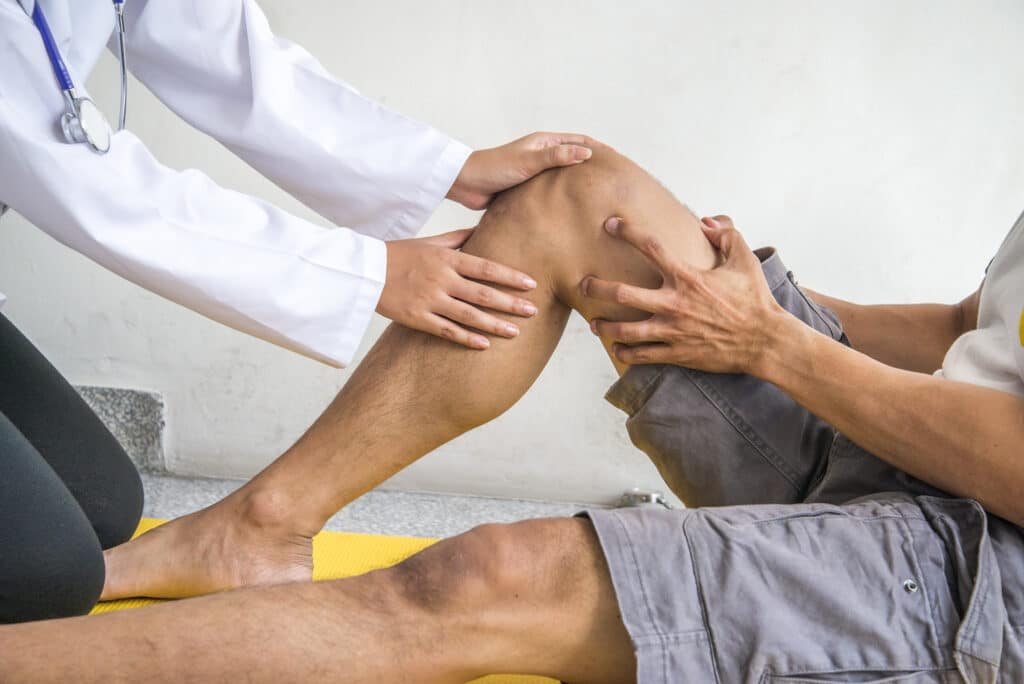
During a sports medicine evaluation, we’ll ask how the injury happened, examine your knee’s stability and movement, and consider imaging when needed. An MRI can help reveal ligament damage and related injuries that aren’t obvious during an exam.
Your goals matter, too. Someone returning to competitive soccer may make a different choice than someone whose knee feels stable during walking and everyday tasks.
If surgery is recommended, ACL reconstruction usually involves replacing the torn ligament with a tendon graft. Physical therapy remains an important part of recovery, and returning to sports can take many months.
Discuss Your ACL Treatment Options in Wichita
A popping sensation, rapid swelling, or a knee that keeps giving out deserves prompt evaluation. Advanced Orthopaedic Associates serves Wichita, Wellington, and Winfield, KS. To discuss an ACL injury with our orthopaedic team, contact us (opens in new tab) or call 316-631-1600.